
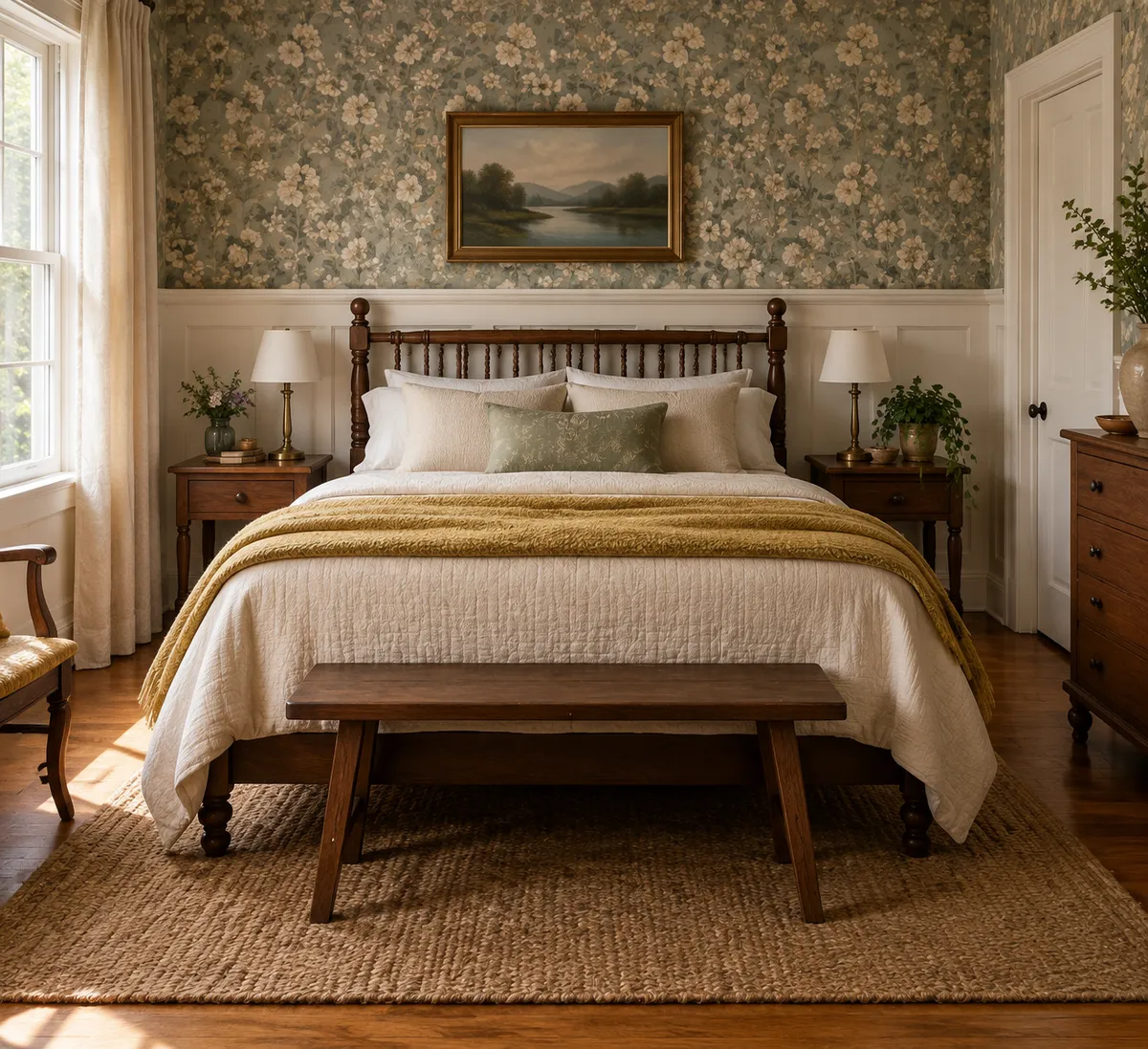
Designer Emily Ruff has taken a small, stripped-back 1926 home in Seattle and turned it into a warm, pattern-filled retreat built for hosting, per Homes & Gardens. The house had been uninhabited, and the finished result leans on architectural details, English-inspired decorating, floral wallpapers, warm woods, brass, stone, and soft yellow tones to restore the charm and continuity the place had lost.
That's the news. Here's the take: the most useful lesson in this project isn't the house itself. It's that "old-house feeling" is a set of moves you can repeat, even if your home was built last decade.
Why This Look Is Having a Moment
Homeowners are drifting away from stark, all-white renovations and toward layered, lived-in interiors, according to the trend context around this project. English country style, muted palettes, and historically sensitive remodeling are all part of that shift. Ruff's Seattle house sits right in the middle of it.
It's hard not to see the appeal. A home that looks like it has stories feels friendlier than one that looks like a showroom, especially when you're about to put eight people around a table.
The Playbook: Moves Worth Copying
Based on what Homes & Gardens reports about the project, here are the design levers doing the heavy lifting.
1. Respect the architecture
The project is described as restoring continuity, meaning the house's original character guides the decisions rather than fighting them. Architectural details, such as arched openings, are among the repeatable moves highlighted. If your home has a few good bones, make them the stars. If it doesn't, adding a single arched opening or similar detail is a modest way to suggest age.
2. Let florals do the talking
Floral wallpaper is a signature ingredient here. Pattern is the fastest shortcut to a collected feel, because it reads as personality rather than polish. A small room, like a powder room or reading nook, is a low-stakes place to test it.
3. Build a warm material palette
The materials list is a lesson in pairing: warm woods, brass, and stone. None of these are flashy, and all of them age gracefully, which is the point. Together they give a room a grounded, slightly weathered richness that new-build finishes often lack.
4. Use soft yellow, gently
Soft yellow tones are part of the palette, and the key word is soft. Yellow can go loud fast, but a buttery, muted version behaves more like sunlight than a highlighter. Paired with warm neutrals and wood, it adds cheer without taking over.
5. Add vintage pieces
Vintage furniture and accents are another repeatable move on the list. One older piece among newer ones can make a room feel like it grew over time instead of arriving in a single delivery.
The English Country Connection
English-inspired decorating is the stylistic thread here, and it's easy to see why it keeps resurfacing. The look is built on pattern, comfort, and a cozy sense of accumulation, which is why it suits a house meant for entertaining. Guests relax faster in a room that looks like people have actually enjoyed it.
The fresh part is restraint. Pairing English-style florals with muted color and clean, warm materials keeps the look from tipping into costume. That balance is what makes it feel current rather than nostalgic.
Designed for Hosting
Homes & Gardens frames the house as one that makes hosting a dream, and the design logic backs that up. Warm tones, layered texture, and pattern create an atmosphere that does half the hosting work for you. Nobody has to be told to get comfortable.
How to Try It at Home
You don't need a 100-year-old house to borrow the approach. A starter plan, drawn from the moves above:
- Pick one room to carry a floral wallpaper.
- Choose a warm neutral paint and pair it with wood and brass.
- Introduce a soft yellow in one or two places rather than everywhere.
- Add one vintage piece with some history.
- If you're renovating, consider an arched opening or similar detail.
The bigger takeaway is patience. Ruff's house works because the layers feel continuous, not shopped in a weekend. Build slowly, repeat a few colors and materials, and your home may start to feel like it has a past, even if it doesn't.