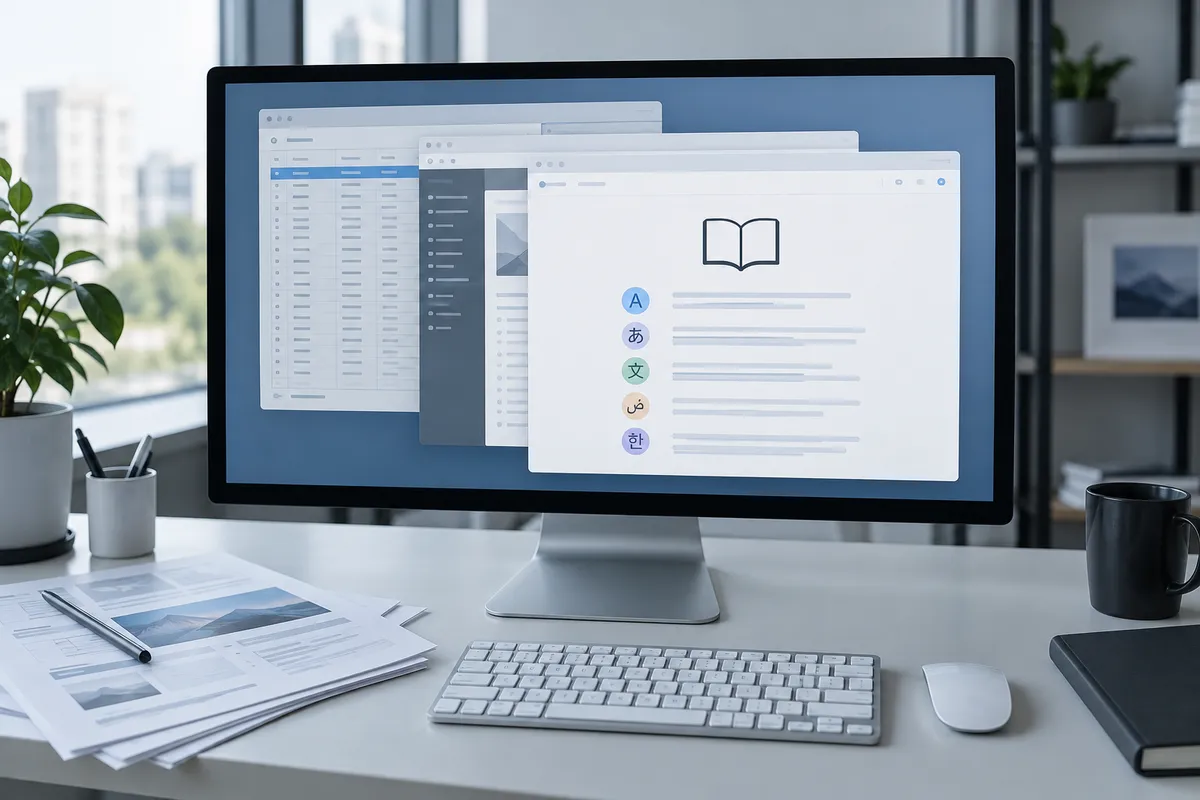
The most famous website nobody is supposed to visit just got a glow-up. Example.com, the reserved documentation domain managed by IANA, rolled out its biggest redesign in decades on September 28, 2026, according to a history compiled by Debugbear. The headline feature: multi-language support, with animated character-by-character transitions between English, Arabic, Chinese, French, Russian, and Spanish.
The story picked up steam on Hacker News this week, where it collected 222 points and 141 comments. That's a lot of attention for a page whose whole job is to say "please don't treat me as a real website."
The Web's Most Reliable Extra
If you've ever read a tutorial, followed a coding guide, or stared at sample documentation, you've probably met example.com. It's the stand-in address: the "Jane Doe" of the internet. Its purpose is simply to exist, quietly, as a safe place for examples to point.
That's why the redesign is such a fun peg. When a site's entire brief is "be boring and stay up," every change is a small statement about priorities. And Debugbear's timeline shows the page has been changing more than you'd think.
A Quick Tour Through 24 Years of Example.com
Debugbear traces the site through eleven notable moments. Here's the highlight reel:
- January 20, 2002: A table-based layout with an ICANN logo, running on Apache 1.3.22. Very early-2000s web, in the most literal sense.
- March 28, 2002: Simplified messaging arrives, introducing the now-recognizable "reserved for documentation" copy.
- February 7, 2003: A citation of RFC 2606 is added.
- July 30, 2010: The .edu domain joins the list.
- July 29, 2013: A redirect is removed, the site migrates to the EdgeCast CDN, and a card-based redesign appears.
- October 17, 2019: A modernized font stack and some copy tweaks.
- January 15, 2025: An infrastructure switch, with the server header removed.
- October 9, 2025: The card design is dropped, the HTML is minified, and the copy gets simpler.
- December 17, 2025: Migration to Cloudflare.
- June 9, 2026: Favicon and HTML cleanup.
- September 28, 2026: The multi-language redesign, with JavaScript, an SVG book icon, and opacity animations.
The Take: Even Placeholders Get Polish
Here's the angle that sticks with me: this timeline reads like a tiny museum exhibit about how the web grew up. Tables gave way to cards, cards gave way to leaner markup, and the hosting moved through different content delivery setups along the way. Few other pages let you watch that arc using one address.
It's also hard not to notice the pattern in the recent entries. Between October 2025 and September 2026, per Debugbear's list, the site saw a card design dropped, HTML minified, a Cloudflare migration, a favicon cleanup, and then the big redesign. That's a lot of tinkering for a page that says almost nothing. The timing suggests someone is giving this corner of the internet real, ongoing attention rather than leaving it to gather dust.
Why Multiple Languages Make Sense
Example.com is used as a reference point by people around the world, so a page that explains itself in six languages feels like a natural fit. Arabic, Chinese, French, Russian, and Spanish join English in the new version. That's our read, not a stated rationale: the report from Debugbear describes what changed, and we're inferring the why.
The flourish is the fun part. Instead of a plain swap, text transitions character by character, using opacity animations. It's a small touch of theater on a page that has historically been the web equivalent of a beige wall.
The Unglamorous Hero Work
The less flashy entries are arguably the most telling. Removing a server header, minifying HTML, and cleaning up a favicon are the kind of housekeeping that most visitors will never notice, which is exactly the point. Infrastructure work is successful when it's invisible.
Debugbear frames this as a rare behind-the-scenes look at how the internet's plumbing gets maintained and improved, and that framing holds up. Foundational tools evolve to handle scale, accessibility, and modern web standards, even when the page itself is just a few sentences long.
A Fun Thing to Try
If you're curious, the easiest way to appreciate the change is to visit example.com and switch languages, then compare it with your memory of the old version. Developers may also enjoy viewing the page source to see how lean the markup is. For the full history, Debugbear's write-up is the place to go.
The Last Word
There's something oddly charming about a site engineered to be ignored getting a thoughtful redesign anyway. Example.com will never trend for its content. But for 24 years it has quietly done its job, and now it does it in six languages, with animations. Not bad for a placeholder.