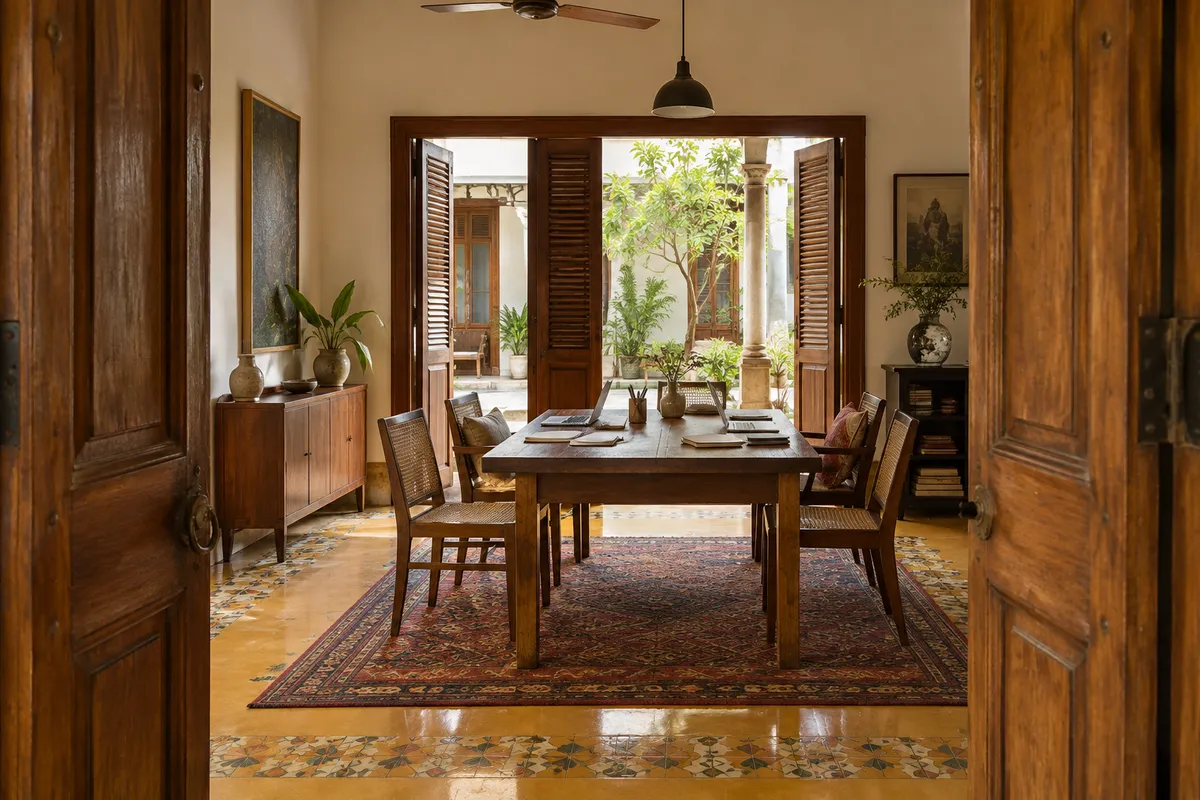
Architectural Digest India recently rounded up five Indian homes that have been given a second life as workspaces, ranging from what it describes as a minimalist retreat in Mumbai to a nostalgic yet cosy studio in Chennai. The through-line, per the outlet: architects and creative teams are turning domestic layouts into offices with warmth, character, and flexibility, and moving away from sterile corporate environments toward spaces that feel personal, adaptive, and rooted in place.
That's the news. Here's my take: the most interesting part isn't the pretty photos. It's the idea that the best office might be one that never set out to be an office.
The Glass Tower Has Competition
As hybrid work reshapes office culture, businesses are rethinking what a workplace should feel like. Per the report, many are choosing comfort, heritage, and human scale over glass-tower uniformity.
It's hard not to see why. A house is built for people to spend long stretches of time in it. It has rooms of different sizes, different moods, and corners where you can think. A standard open-plan floor has... a lot of desks.
The Five Projects, as Listed
The roundup covers five spaces. The details below are limited to the titles and themes the piece provides, so consider this a guided preview rather than a full tour.
1. Extending Office Hours
The title alone hints at the blurry line between home and work that this trend plays with. How that plays out in the design is best seen in the original feature.
2. Home Sweet Office
The name says it all: the pitch is a workplace that borrows the comfort of domestic life rather than fighting it.
3. The Charm Of A Bandra Bungalow
Bandra is a Mumbai neighborhood, and a bungalow there is a very different proposition from a conference-room floor. The title signals that character is the selling point.
4. Rising From The Ruins
This one suggests a project that began with something worn down and brought it back to use. That fits the broader adaptive-reuse theme the article highlights.
5. Reviving The Haveli
A haveli is a traditional Indian mansion. Turning one into a workplace speaks to the heritage angle: old rooms, and per the article's themes, features like courtyards and terraces becoming part of the working day.
Why Reuse Makes Sense Now
In India's dense cities, adaptive reuse of homes also offers a timely design response to sustainability, preservation, and changing work habits, according to the report. In plain terms: rather than tearing down and building new, you keep what's there and give it a new job.
There's a practical logic to that. Existing buildings come with character that's expensive to fake. A new office can install a "cozy corner." An old home already has one.
Steal the Ideas, Skip the Haveli
You probably don't have a heritage mansion handy. But the domestic details the feature points to are transferable at any scale:
- Light: Position desks where natural light actually reaches.
- Texture: Swap uniform finishes for materials that feel lived-in.
- Outdoor-adjacent space: Courtyards and terraces are called out as assets. A balcony or even a window seat can do a smaller version of the same job.
- Older rooms with a story: Resist the urge to flatten every quirk. A odd-shaped room can become the favorite meeting spot.
These are my reading of the themes, not prescriptions from the architects. But they hold up for a spare bedroom or a corner of the living room.
The Takeaway
For years, the office aspired to look like a lobby. This roundup suggests the smarter move might be to look like somewhere you'd actually want to stay. If a haveli can double as a place to work, your spare room can probably handle a spreadsheet.