Elle's 2022 interview with Amanda Seyfried is back in circulation, republished around the release of the 2026 Holmes documentary You Can See Everything. It's a good excuse to revisit one of the most talked-about bits of TV acting in recent memory: that voice.
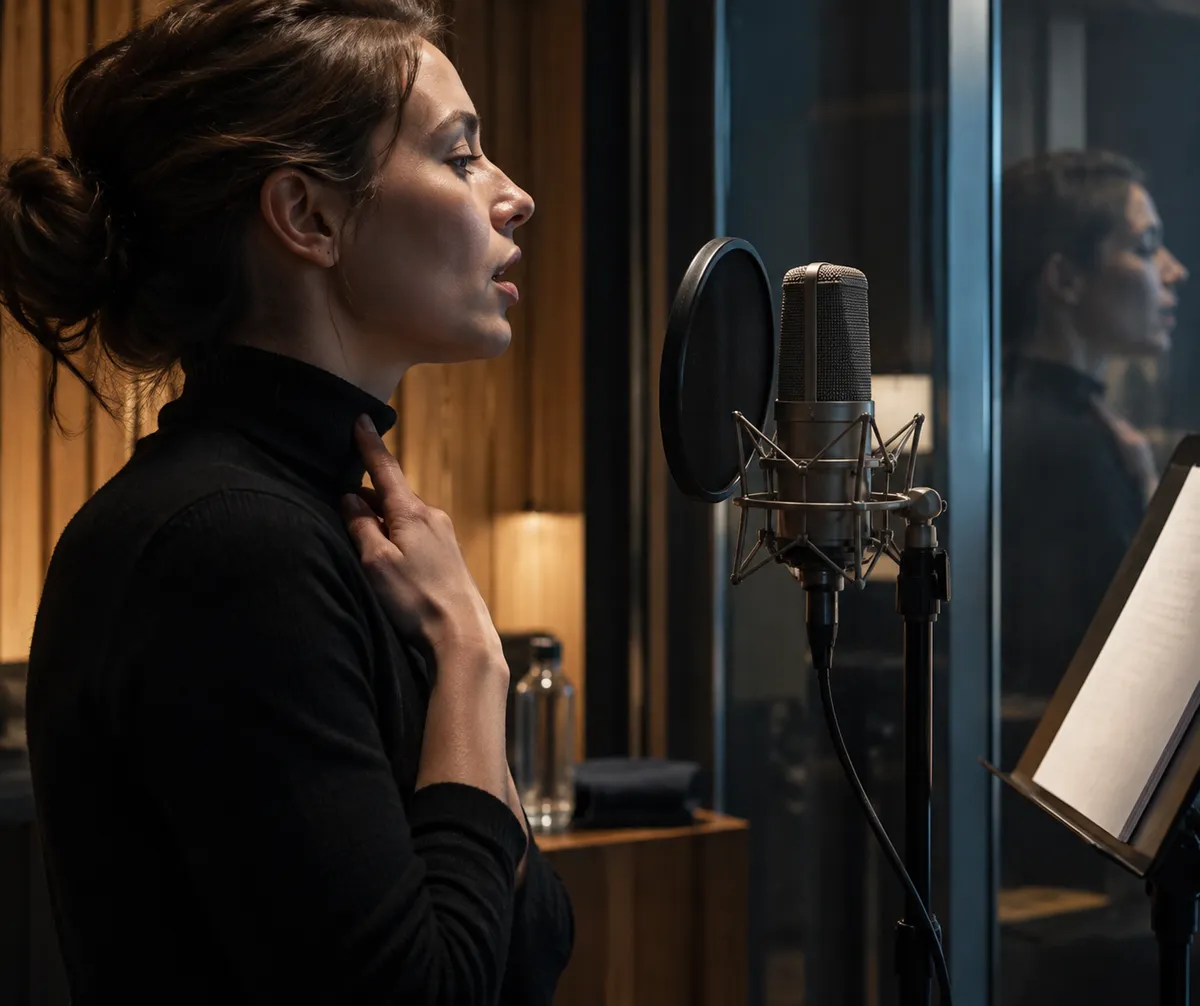
Per Elle, Seyfried approached Elizabeth Holmes's famously deep register less like an impression and more like an accent, something built from mouth shape, breath, projection, and a whole lot of repetition. She went on to win an Emmy for The Dropout, and the voice is a big part of why the performance stuck.
An Accent, Not a Party Trick
Here's the distinction that makes the whole thing click. An impression is a greatest-hits reel: a few recognizable quirks, delivered on cue. An accent is a system. It changes where sound sits in your mouth, how you pace your breathing, and how you push air behind each word.
According to the Elle piece, that's the lens Seyfried used. The voice wasn't a gimmick layered over a performance. It was the foundation the performance stood on.
It's hard not to see why that matters on screen. A voice treated as a one-off bit gets tiring over a multi-episode series. A voice built like an accent can hold steady, slip, and recover, which is exactly what a character performing a persona needs to do.
Repetition Is the Secret Ingredient
The unglamorous part of the process, per Elle, is the repetition. Mouth shape, breath, and projection are physical habits, and physical habits only become automatic through practice. That's the same reason a musician runs scales and an athlete drills the same movement over and over.
The payoff is that the voice stops feeling like effort. When an actor has to think about every syllable, the audience can sense it. When the mechanics are second nature, the performance gets to be about the character instead of the technique.
The Voice Was Part of a Costume
The Elle piece also ties the voice to the rest of Holmes's public image: the black turtleneck uniform and the carefully controlled persona. Together, the article frames them as a calculated performance of power in a male-dominated Silicon Valley.
That framing is the interesting part. Voice, wardrobe, and presentation work like a package. Each one sends a signal about authority before a single business claim gets made. (Anyone who has watched a keynote and noticed the presenter's outfit has seen this principle in action.)
A note on how we're reading this: the connection between deep voices and perceived authority is the article's framing, and the takeaway here is our own. But it's a useful way to watch the show. Once you notice that the voice is doing the same job as the turtleneck, the performance reads as layered. Seyfried isn't just playing Holmes. She's playing Holmes playing a role.
Why This Is Back in the Conversation
The timing is the documentary. You Can See Everything has revived interest in Theranos, image-making, and the psychology around the company's story, and Elle's interview has resurfaced alongside it. For heavy streamers, it works as a handy companion read: a behind-the-craft look at the show that made the story a pop-culture touchstone.
It also explains why the performance has had such staying power. Seyfried's Emmy-winning turn remains a case study in how voice and styling can shape public perception, whether that's on a screen or in a boardroom.
What to Watch For on a Rewatch
If you're planning to revisit The Dropout, here are a few things worth tuning into:
- The consistency. Listen for how steady the voice stays across scenes, a sign the mechanics are baked in.
- The pairing. Notice how the voice and the turtleneck show up together as a single, deliberate image.
- The effort behind the ease. Per Elle, the voice came from breath and projection work. Try to spot where that control is doing the heavy lifting.
The Takeaway
The most useful lesson here isn't about Holmes at all. It's that a convincing performance, on screen or off, is built from small, repeatable physical choices. Seyfried treated a famous voice like a craft to be learned, and in doing so showed how much of authority is something you construct, one practiced breath at a time.