Every traveler knows the moment. You unpack, and there it is: a shell, a tiny spoon, a shot glass from a city you barely remember. The Spruce recently asked professional organizers how to declutter souvenirs, and the guidance centers on sorting mementos intentionally, displaying favorites creatively, and repurposing items into meaningful home decor. The headline promise: you can keep the memories without letting the objects take over your space.
The best angle on all of this, it seems to me, is the souvenir audit: a simple, repeatable pass through your keepsakes with four possible outcomes. Keep, display, donate, or transform. Here is how to think about each, built on the framework the Spruce piece lays out.
Why Souvenirs Pile Up
As people travel more and gravitate toward calmer, clutter-free homes, per the Spruce's framing, souvenirs can quickly shift from sentimental keepsakes to visual overwhelm. That tension is the whole story. A souvenir is bought in a moment of joy, but it has to live in your house for years, and the house doesn't care how nice the trip was.
The fix, according to the organizers, isn't to feel guilty or to toss everything. It's to be intentional. That word does a lot of work, so let's make it practical.
Step One: Sort Without Guilt
Start by gathering your souvenirs in one place so you can see the full picture. It's hard not to wonder how many of us have never actually seen all our mementos at once, since they tend to be scattered across shelves, drawers, and that one box in the closet.
Then sort with a simple question in mind: does this item still connect me to a memory that matters? The point of the audit is to preserve memories, not objects. If a keepsake no longer sparks anything, letting it go doesn't erase the trip. That's my read on the idea, and it fits the "declutter without guilt" spirit of the Spruce's advice.
Step Two: Choose a Lane
Each item gets one of four fates.
Keep
These are the pieces with real meaning. Keep them on purpose, which means they have a defined home rather than floating around in a pile.
Display
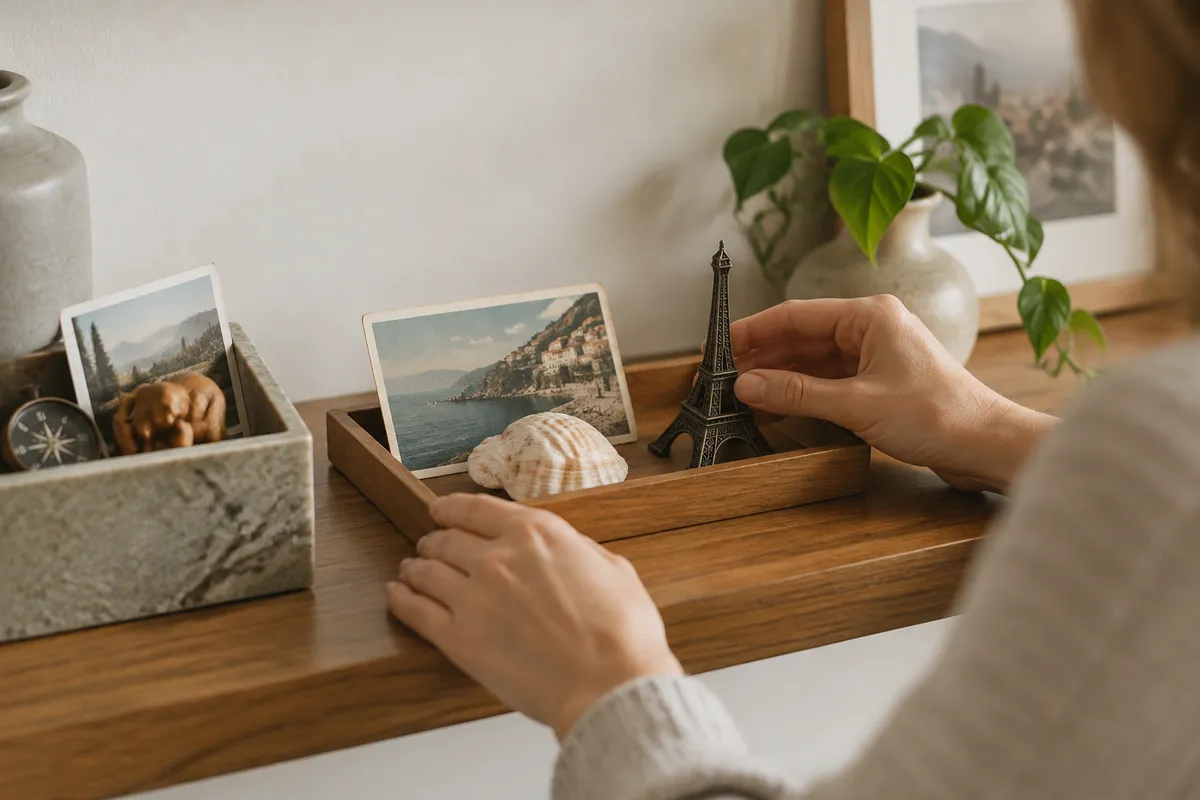
If you love something, let it be seen. The organizers' advice leans toward creative displays, so favorites can act like part of your decor instead of hiding in a drawer. A souvenir you never look at is, functionally, storage.
Donate
Items that were fun to buy but don't fit your life are good candidates to pass along. Somebody else may enjoy them, and your shelves get breathing room.
Transform
This is the most fun lane. Repurposing means turning vacation mementos into functional decor, so a keepsake earns its space by doing a job as well as holding a memory.
Step Three: Display Like You Mean It
The difference between clutter and a collection is often just curation. A handful of favorites shown deliberately reads as personal style. Thirty items crammed together reads as a yard sale in waiting. That's my take, not a rule from the source, but it tracks with the broader trend the Spruce points to: intentional living, memory curation, and personalized interiors.
The goal is a home that tells your story without shouting all of it at once.
Step Four: Make Them Useful
Repurposing is where souvenirs stop being guilt objects. The idea is to take a mementos and give it a function in your home decor, so it's both meaningful and practical. If a keepsake has a purpose, it's much easier to justify the space it takes up.
A Quick Audit Checklist
Try this the next time you return from a trip, or this weekend if the closet box is calling:
- Gather every souvenir in one spot.
- Pick up each item and ask whether it still connects you to a memory that matters.
- Assign it a lane: keep, display, donate, or transform.
- Give the keepers a deliberate home.
- Move the donate pile out of the house promptly, before second thoughts creep in.
That last step is my own practical addition, not a quote from the organizers, but anyone who has hauled a donation bag back inside will understand.
The Takeaway
The most useful idea here is a quiet one: a souvenir is a reminder, and a reminder only works if you can find it and enjoy it. Fewer, better-placed mementos do more for your memories than a crowded shelf ever could. The trip already happened, and nothing you donate can take it back.