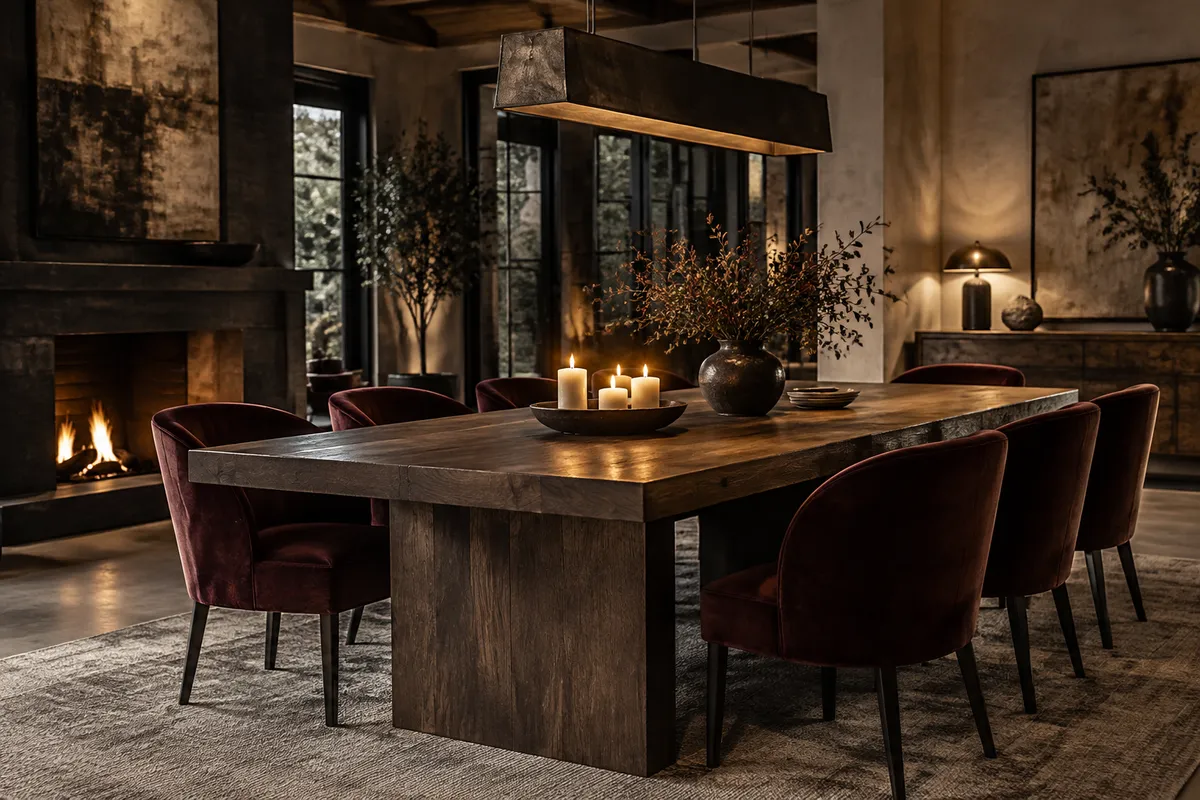
Industrial design has a reputation problem: it looks great in photos and feels like a loading dock at 7 p.m. Jennifer Aniston's Beverly Hills dining room, designed by Stephen Shadley, is getting attention this week as a counterexample. Per Homes & Gardens, the room pairs exposed bulbs and sleek windows with natural materials, and the result is a space described as cocooning rather than cold.
The timing is handy. As fall settles in and, per the coverage, 2026 design trends drift away from cool, polished minimalism, plenty of people are craving rooms that feel textured and lived-in. Here is how to borrow the logic of Aniston's dining room without a renovation or a Beverly Hills budget.
The Core Idea: Let Raw Meet Soft
The Homes & Gardens piece uses the room as a blueprint for making industrial interiors warmer, softer and more livable. The industrial elements stay: the exposed bulbs and the sleek windows are part of the room's character. What changes is what surrounds them. Wood, stone, rugs, velvet, candles and warm lighting are the key tools the article highlights for balancing raw industrial materials.
That's a useful takeaway on its own. You don't have to rip out the metal and glass. You just need to give them company.
Step 1: Bring in Wood and Stone
Metal, glass and concrete all read as hard and cool. Natural materials are the quickest counterweight. A wood dining table, a stone-topped surface or even a few wooden accessories introduce grain, variation and a bit of earthiness.
A few low-effort ways to try it:
- Swap a metal tray or bowl for a wooden one on the table.
- Add a stone or marble-look serving board as a centerpiece base.
- Choose wood-framed mirrors or art to break up expanses of glass and steel.
These are my budget-friendly spins on the idea, not specifics from Aniston's room, but they follow the same principle the article describes: natural materials balance the raw ones.
Step 2: Layer a Rug Underneath
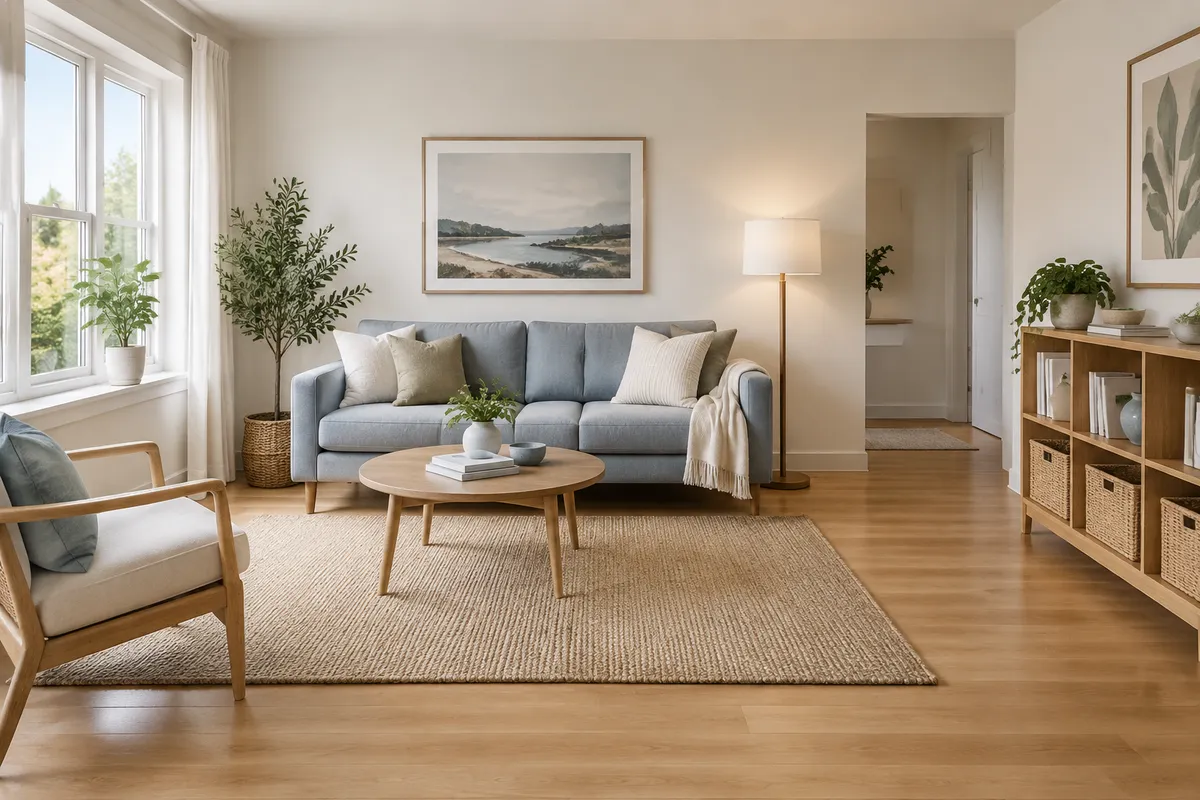
Hard floors plus hard furniture can make a dining room echo. A rug is one of the fastest ways to soften both the look and the feel. It anchors the table, adds color or pattern, and gives the room a floor-level dose of texture. Rugs are on the article's list of warming elements, and they are also the easiest to change seasonally if you want a moodier fall palette.
Step 3: Add Velvet
Velvet is the textile equivalent of a dimmer switch. It catches light, looks rich in darker shades, and contrasts nicely with anything sleek. Dining chair cushions, a pair of upholstered chairs or even a velvet table runner can do the job. If a full reupholstery feels like a big commitment, start with something removable.
Step 4: Fix the Lighting
Exposed bulbs are a signature industrial look, and Aniston's dining room keeps them. The warmth comes from how the light feels. Warm lighting is one of the elements the article specifically points to.
It's hard not to see the practical lesson here: the fixture can stay bare-bones as long as the glow is flattering. Some easy checks:
- Look for bulbs labeled "warm" rather than "cool" or "daylight."
- Use a dimmer if your fixture allows it.
- Add a lamp or two at lower levels so the room isn't lit only from overhead.
Step 5: Finish With Candles
Candles are the cheapest item on the list and arguably the most atmospheric. They add flicker, softness and a sense of occasion, and they make a dining table feel set for a long dinner rather than a quick bite. Group a few at different heights on the table, and the room shifts from showroom to gathering place.
Why This Look Works Right Now
There's a reason celebrity homes keep driving decorating ideas: they give a name and a face to a style, and then readers translate it to their own budgets. Aniston's dining room is a particularly translatable case, because the recipe is not about expensive one-offs. It's about contrast. Hard materials look better next to soft ones, and cool surfaces look better in warm light.
The article's framing, a lived-in version of industrial design, suits the season. Fall is when people start spending more time at the table, hosting meals and lingering over them, and a room that feels inviting makes that easier.
A Quick Warm-Up Checklist
- Keep the industrial bones: the metal, the glass, the bare bulbs.
- Add at least one natural material, such as wood or stone.
- Put a rug under the table.
- Bring in velvet through chairs, cushions or a runner.
- Switch to warm light and add low lamps.
- Light a few candles.
No one is suggesting you can recreate a Stephen Shadley design with a candle and a throw pillow. But the lesson from this Beverly Hills dining room is refreshingly simple: industrial style doesn't have to feel cold. It just needs something soft to lean on.