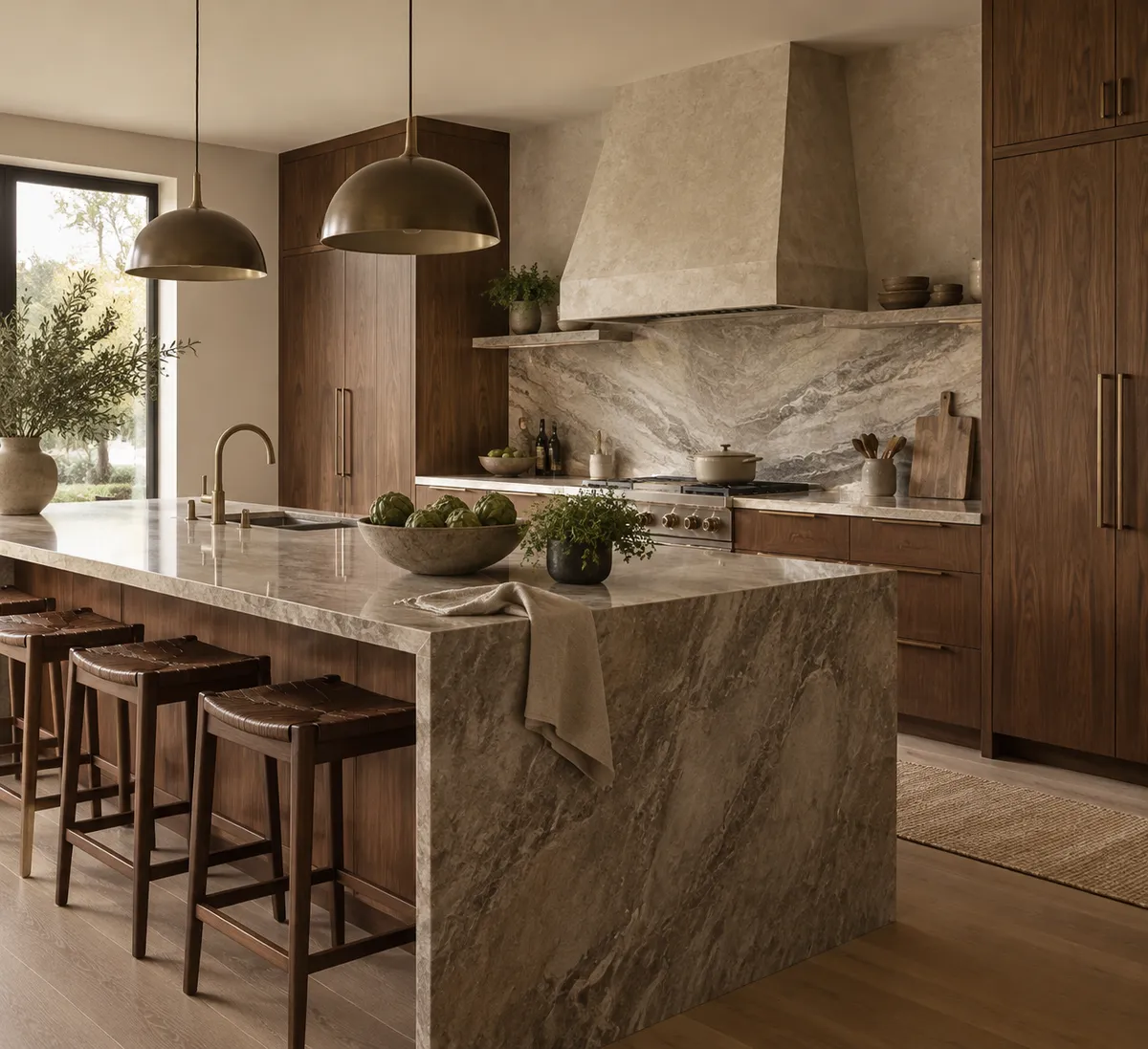
The all-white, gleaming, laboratory-adjacent kitchen has had a long run. According to a new roundup from Veranda, designers say its successor is already on the way: kitchens that are calmer, warmer, and more integrated into the rest of the home. The magazine lists 12 trends it expects to be everywhere in 2027, from sculleries to smart tech that doesn't look like smart tech.
The common thread, per Veranda's reporting, is a move toward kitchens that hide clutter, use richer natural materials, and function as polished living spaces rather than purely utilitarian rooms. The timing makes sense: as open-concept living continues, the kitchen is more visible than ever, and homeowners want it to look beautiful, feel calm, and stay easy to maintain.
This piece commits to one angle: which of these ideas can a regular person borrow without a luxury budget? Some of the 12 are big-ticket. Others are really attitudes you can adopt. (The sorting below is my own read, not Veranda's.)
The Big Idea: Make the Mess Disappear
Three of Veranda's trends orbit the same impulse: keep the work out of sight.
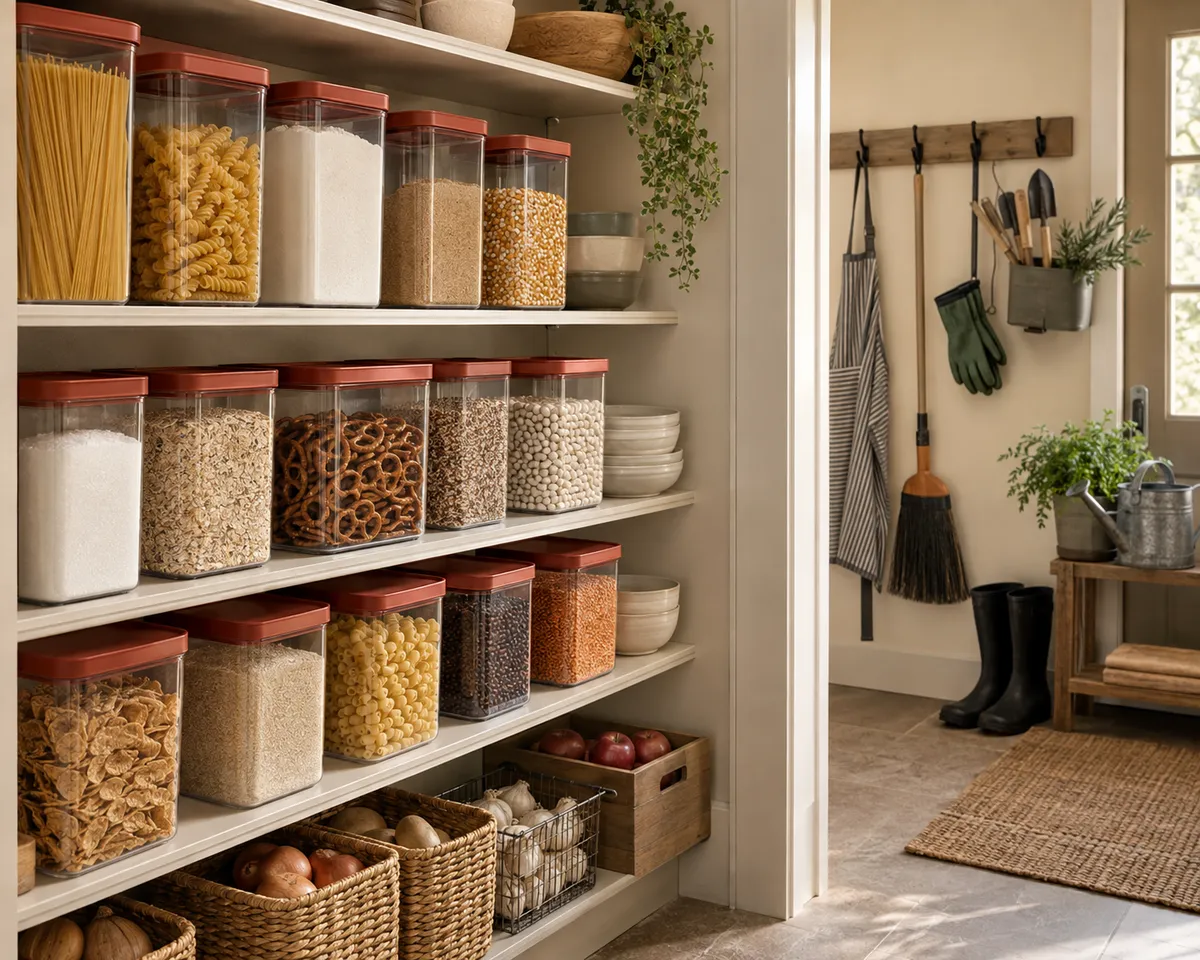
The rise of the scullery
A scullery is a secondary workspace tucked behind the main kitchen, and Veranda lists its rise as a 2027 trend. The appeal is easy to grasp: the cooking happens in one room, the cleanup happens in another, and guests see only the pretty one.
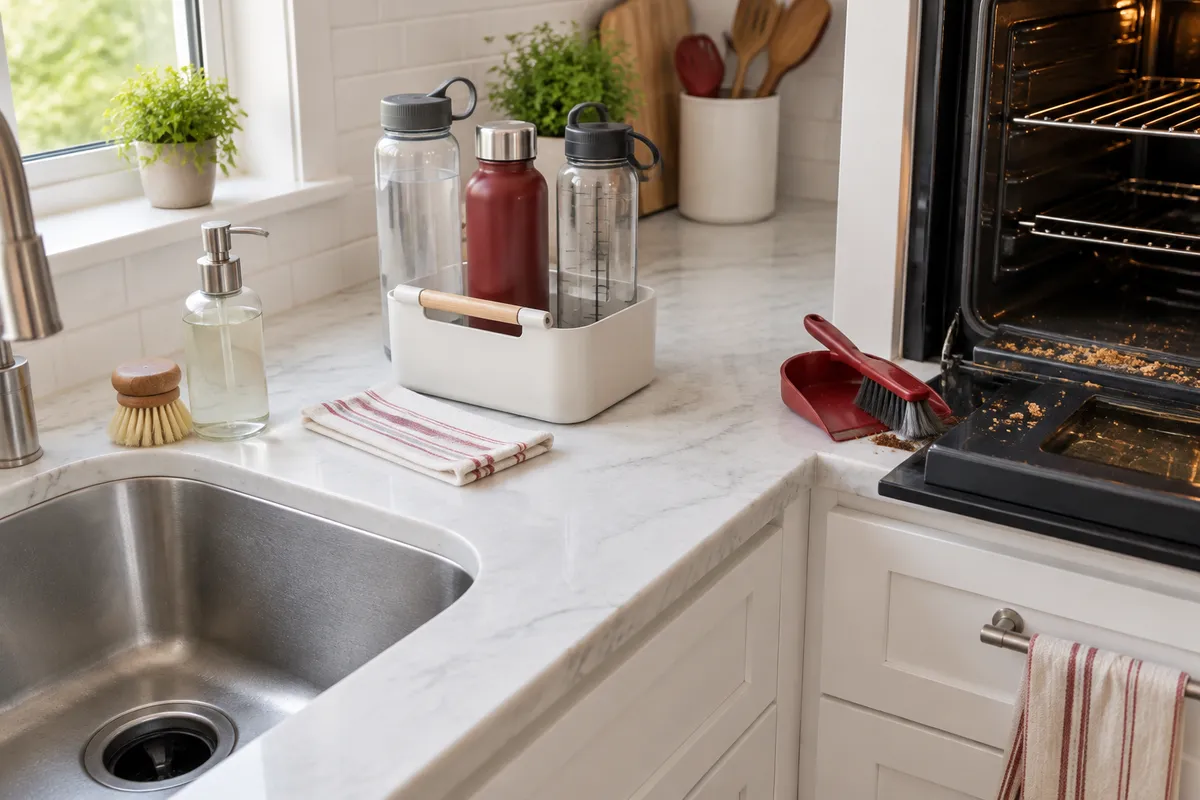
Most of us don't have a spare room hiding behind the pantry. It's hard not to wonder, though, whether the underlying idea scales down. A closet, a corner, or a section of counter that holds the toaster, the coffee gear, and the dish rack is a modest cousin of the same principle.
Invisible kitchens
The related trend is the invisible kitchen, where the room is designed to blend in rather than announce itself. Think of it as the kitchen equivalent of a good stage crew: the work gets done and nobody sees the ropes.
Smart kitchens that don't look high-tech
Veranda also flags smart kitchens that hide their technology. That fits the broader mood. Tech stays, but the blinking-gadget look goes. If you're upgrading appliances, the takeaway is to favor options that blend into the surroundings rather than shout from the counter.
The Warm-Up: Wood, Stone, and Craft
This is the section where the all-white kitchen gets politely shown the door. Several of Veranda's trends are about adding depth and texture.
- Richer wood tones: Darker, warmer wood is on the list, a clear break from pale and sterile.
- Natural materials and craftsmanship: Designers are leaning toward materials with visible character and handmade qualities.
- Statement stone: Stone gets to be the star of the room instead of a quiet supporting player.
- Creative millwork: Cabinetry and trim become design features, not just storage.
Veranda frames the broader shift as a move away from sterile minimalism toward warmth, craftsmanship, and what it calls practical luxury. That's a useful lens, and my own take is that the cheapest way to try it is at the small scale. A wooden cutting board, a handmade bowl, or new cabinet hardware won't replace a stone slab, but it nudges the room in the same direction.
The Showpieces: Hoods, Tile, and Tone
Three more trends turn functional parts of the kitchen into decoration.
Decorative range hoods
The range hood, historically the least glamorous object in the room, is getting a design moment per Veranda. If it's going to loom over the stove anyway, the thinking goes, it may as well look good.
Artistic tile backsplashes
Backsplashes are also getting more expressive. This is one of the more accessible ways to add personality, since it's a contained area and a visible one.
Tonal kitchens
Tonal kitchens use a single color family throughout. Pairing this with the calm theme of the whole roundup makes sense: fewer competing colors means a quieter room. For a renter-friendly or budget version, paint and matching accessories can get you part of the way there. That's my suggestion rather than something Veranda specifies.
The Social Shift: Kitchens as Living Rooms
Two trends speak to how people actually use the space.
First, Veranda points to kitchens that feel like living rooms. The room is no longer just where dinner gets made; it's where people hang out. Second, kitchen islands are turning into gathering tables, which is a natural extension. The island becomes the spot where homework, snacks, and conversation all land.
If you want to try this without renovating, consider what makes a living room feel like one: soft lighting, comfortable seating, and things you actually like looking at. Adding a stool or two with some comfort to them, or a lamp in place of harsh overhead light, moves a kitchen in that direction. Again, that's my read on how to apply the idea, not a designer quote.
What to Do With This List
A fair caution: these are designer predictions, and designers work with budgets most of us don't. Veranda's list includes things like sculleries and statement stone that are firmly in renovation territory. Treat it as a mood board, not a shopping list.
If you're planning a real remodel, a sensible filter is to ask which trends solve a problem you already have. Cluttered counters? The hidden-kitchen and scullery logic applies. A cold-feeling room? Warmer woods and natural materials are the common thread. A kitchen nobody lingers in? The living-room and gathering-table ideas are for you.
The quiet message of the whole roundup is that the kitchen of 2027 is less about showing off and more about feeling good to be in. After years of gleaming white surfaces that looked wonderful in photos and slightly chilly in person, that might be the most welcome trend of all.