
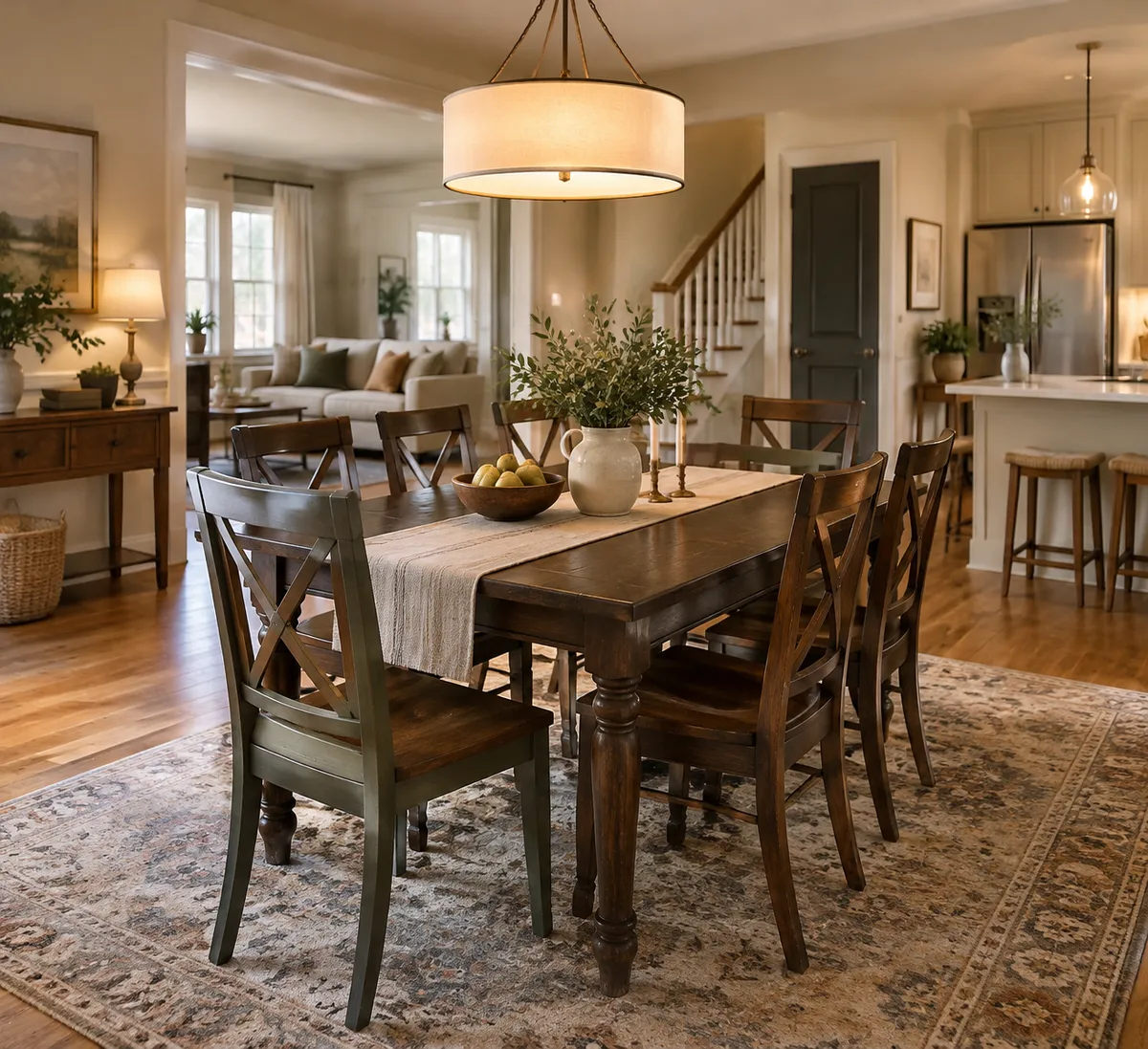
A dining room that can be seen from almost every point on the first floor has a lot of pressure on it. Per Apartment Therapy, that was the situation in one recent home makeover: the furniture looked dated, the room was highly visible, and the design needed to "pack a punch." The fix, according to the outlet, was a single DIY update that changed how the whole space felt.
That's the whole premise, and it's a satisfying one. Instead of replacing the furniture, the homeowners changed how it looked, and the room started to feel more intentional and stylish.
What We Actually Know
The details available here are lean, so let's be clear about what's reported. Apartment Therapy's story describes a dining room where one DIY project took dated furniture and helped the space feel more put-together. It also notes the room is visible from nearly everywhere on the first floor, which raised the stakes for getting the design right.
What we don't have is the specific project, the materials, the cost, or the time it took. So this isn't a how-to for that exact room, and we won't pretend to know the steps. For the full before-and-after, the original story is the place to go.
Why the One-Change Approach Works
Here's where the take comes in, and it's ours, not the original reporter's: a single, well-chosen update tends to beat a scattered pile of small ones. When a room has one clear thing going for it, the eye has somewhere to land, and the older pieces around it stop reading as "dated" and start reading as "part of the plan."
The broader appeal is easy to see. Budget-friendly upgrades resonate with homeowners who want high-impact changes without buying new major furniture. And DIY room refreshes tend to draw attention because they make good design feel achievable. If one project can shift a whole room, the barrier to trying it feels a lot lower.
Where a Single Update Might Come From
The makeover's specific change isn't spelled out in the material we have, so treat the following as general ideas, not a description of what this household did. The usual suspects for modernizing furniture without replacing it include:
- Paint: a new color can reset the look of a table or chairs.
- Stain: refinishing wood can swap a tired tone for a fresher one.
- Upholstery: new fabric on seats can change the mood fast.
- Styling: how the table is set and what surrounds it can modernize the room.
Pick one, commit, and let the rest of the room support it.
Designing for a Room Everyone Sees
Open sightlines change the rules. A dining room visible from most of the first floor works almost like a set piece: it's the backdrop to everything else downstairs. That's likely why this project's goal was impact rather than subtlety.
A few practical thoughts, offered as our own advice rather than anything from the original story:
- Stand where guests stand. Check the room from the entryway, the kitchen, and the living area. If it looks dated from any of those spots, that's your priority view.
- Choose a focal point. One bold update does more work than five timid ones.
- Let the old pieces earn their keep. Furniture that's structurally sound often just needs a new finish or fabric, not a trip to the store.
The Takeaway
The appeal of a one-change makeover is that it quietly argues against a common assumption: that a room looks dated because the furniture is dated. Sometimes the furniture is fine, and it just needs one good decision. If your dining room is the star of your floor plan and it's feeling a little stuck in another decade, the smartest first question may not be "what should I buy?" but "what's the one thing I could change?"