
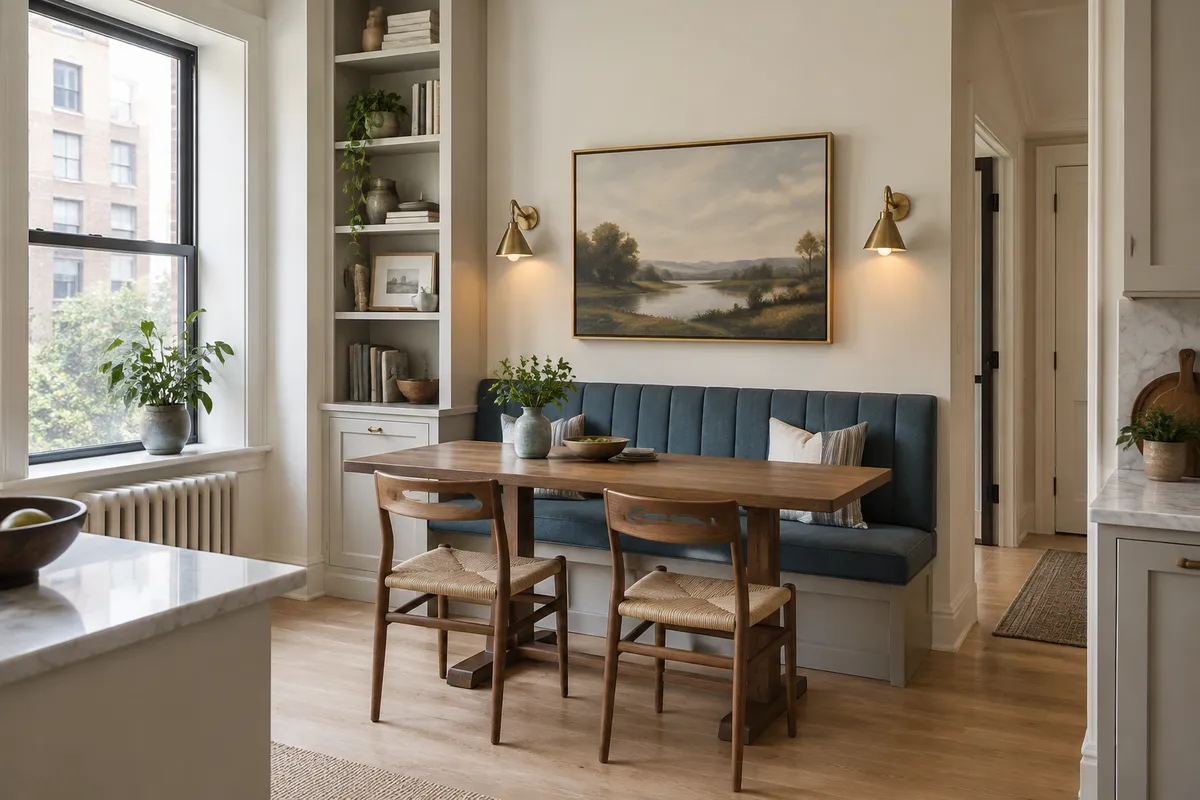
New York City apartments have a reputation for being compact, and the people who live in them have a reputation for making that look effortless. HomeDecor, in a piece picked up by Yahoo, collected five design tricks that stylish New Yorkers use in small apartments, with the idea that a creative approach can make a tight space as functional and stylish as a larger home. The tricks cover storage, flow, seating, lighting, and personality, all without making a compact home feel crowded.
The list is short, but the logic is consistent: small spaces don't need less style, they need smarter decisions. Here's how each trick works, and how you might borrow it wherever you live.
1. Use Vertical Storage
When floor space is scarce, the only direction left is up. Per HomeDecor, vertical storage is the first trick on the list, and it makes sense as the foundation for everything else. Tall shelving, wall-mounted storage, and anything that draws the eye upward keeps belongings off the floor and surfaces clear.
It's hard not to see why this comes first. Clutter is what makes small rooms feel smaller, and moving it up and out of the way is the quickest fix.
Try it: Look at the empty wall space above your doors, desk, or sofa. If you rent, look for freestanding tall units that don't require drilling.
2. Add Banquette Seating
The second trick is banquette seating, the built-in or bench-style seating you'd expect in a cozy restaurant booth. In a small apartment, the appeal is that it gives you a place to sit, and eat or work, without the footprint of a full set of separate chairs.
There's a nice pop-culture echo here. Anyone who has watched a sitcom set in a city apartment knows the cozy corner booth as a place where scenes happen. A banquette brings that same hangout energy to a real kitchen or dining nook.
Try it: If a built-in isn't an option, a bench tucked against a wall with a few cushions can approximate the look. That's our suggestion, not the article's, but it follows the same space-saving idea.
3. Choose Light Colors in Open-Plan Spaces
In open-plan apartments, where living, dining, and cooking blur together, HomeDecor says to choose light colors. The reasoning ties to the goal of making a space feel bigger and more cohesive, rather than chopped into visual chunks.
It's a classic small-space move, and it pairs well with the first trick: light walls and tidy vertical storage make a room read as calm instead of cramped.
Try it: Keep the palette consistent across the open area so the eye travels without hitting hard stops.
4. Embrace Bold Color in Small Rooms
Here's the twist. After telling you to go light in open-plan spaces, the list says to embrace bold color in small rooms. Yes, that seems to contradict trick three, but the two work as a pair: light for the big shared space, and bold for the rooms that are enclosed anyway.
The takeaway from the HomeDecor piece is that personality matters as much as practicality. A small room doesn't have to apologize for its size, and a deep, confident color can make it feel intentional rather than merely tiny.
Try it: A powder room, a small bedroom, or a nook is a low-stakes place to experiment. Paint a sample patch first and see how it looks at different times of day.
5. Go for Wall Lights in Bedrooms
The final trick is wall lights in bedrooms. The practical payoff is easy to see: swapping a bedside table lamp for a wall-mounted light frees up the surface for a book, a glass of water, or a phone charger, and it keeps the bedside area uncluttered.
This is the most renter-sensitive tip on the list, since wall fixtures can involve wiring. If your lease is strict, plug-in versions are one option worth looking at, though that's our note rather than something the article specifies.
The Bigger Idea
Taken together, the five tricks make a tidy philosophy. Go up with storage, share your seating, keep the open areas light, let the small rooms be bold, and get lamps off the nightstand. None of it requires a bigger apartment, only a more deliberate one.
And with housing costs rising and many people living in smaller urban spaces, that mindset has real appeal. The takeaway from New York is not that you need to live there to pull this off. It's that when every inch has to earn its keep, the apartments that look best are usually the ones where somebody made a choice about every single inch.