
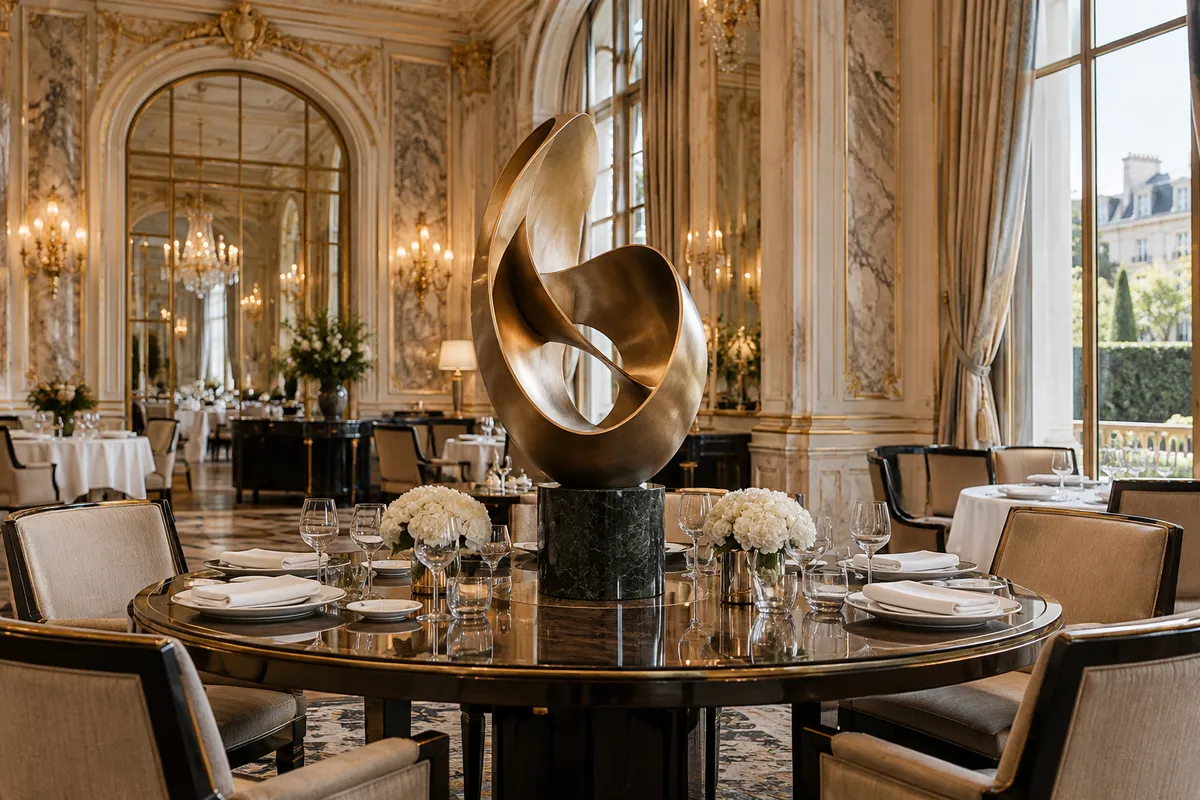
Elle has taken a fresh look at Le Meurice, the Paris hotel that has been welcoming guests since 1835 and, per the magazine, was the city's first hotel to earn the palace designation. The pitch: this legendary address makes a convincing case that history and modernity can share a roof. The timing, as the coverage frames it, lines up with Paris Fashion Week and Art Week, two stretches when the city's luxury scene is in full spotlight.
The angle worth pulling out here is a simple one. Plenty of old institutions sit on their reputations. Le Meurice, according to Elle, keeps adding new chapters to the old story.
The Old-School Credentials
Start with the basics, as reported by Elle. Le Meurice has been a hotel since 1835. It is described as Paris's first palace-designated hotel. And its artistic heritage runs deep: the coverage points to a legacy that includes Dalí and Picasso, names that need no introduction at any gallery or dinner party.
That is a lot of history to carry. It is also the kind of résumé that can turn a hotel into a museum piece: lovely to look at, a little stiff to live in. The interesting question is how a place like this avoids that fate.
The Modern Layer
Per Elle, one answer is design. The hotel's contemporary interiors come courtesy of Philippe Starck, a name long associated with playful, modern takes on interiors. The pairing of a historic address with a designer known for a contemporary eye is the whole thesis in miniature: keep the bones, update the mood.
It is hard not to read that as a smart strategy. Travelers who want a sense of place get the heritage. Travelers who want something that feels current get the design. Nobody has to choose.
Dinner as Installation
The most eye-catching example in the coverage is "The Stage," an immersive dining experience tied to artist Harry Nuriev. Elle highlights it as an installation dinner, which is a notable way to think about a meal: less "table by the window," more "you are inside the artwork."
This is where the Dalí and Picasso lineage gets interesting. A hotel with that artistic backstory is not just decorating with art; it is, in a sense, continuing a tradition of hosting it. Nuriev's installation is the present-day version of that habit. That connection is our read, not a claim from the coverage, but it is hard to miss: the past supplies the credibility, and the present supplies the news.
Wellness Gets a Head Start
The other modern note Elle sounds is the spa. Among the treatments highlighted are Japanese head spa sessions, a type of scalp-focused ritual that has been making its way onto wellness menus. Seeing it at a palace hotel suggests that even the most traditional addresses are paying attention to what travelers want to try now.
Again, the takeaway is our interpretation: a spa menu is a quiet barometer of a hotel's willingness to evolve. A classic address offering a current treatment tells you it is still listening.
Why This Model Resonates
The coverage argues that high-end travelers are increasingly looking for both authenticity and novelty, and may be tired of hotels that chase every trend. Le Meurice's approach, honoring legacy while evolving, is positioned as the antidote.
That makes it a handy case study even for people who will never book a suite. The same logic applies to any brand with a long history, whether a restaurant, a magazine, or a franchise your family has been watching for decades:
- Keep what made it special. Heritage is the one thing a newcomer cannot manufacture.
- Invite new voices in. Starck's interiors and Nuriev's installation are examples of bringing fresh creative energy to an established house.
- Update the experience, not the identity. A head spa treatment adds something new without rewriting the story.
The Takeaway
Le Meurice has had nearly two centuries to practice, and the lesson from Elle's profile is that staying elegant is not about standing still. A hotel that hosted the Dalí and Picasso era could have settled into being a beautiful relic. Instead, it is putting on installation dinners and offering scalp rituals, which is a pretty good way to prove that the oldest name in the room can still be the most current one.